Watercolor vs. Acrylic Paint: Which Is Better for Beginners?
Standing in the art supply aisle can feel like an examination you never revised for, because the dozens of near-identical tubes give almost no indication of how differently their contents will behave once diluted and dragged across a surface. When you or your child are finally ready to start painting, the watercolor vs. acrylic paint decision is usually the first genuine fork in the road, and most newcomers choose badly simply because the two look interchangeable in the tube while sharing almost none of the same working properties on paper. Both are water-based. Both are beginner-friendly. Yet the divergence between them, which announces itself the instant a loaded brush touches the substrate, is precisely what determines whether a new painter persists past the frustrating third attempt or quietly abandons an expensive set in a drawer. Your goal might be a quieter weekend hobby, or it might be identifying the right first medium for a child who already decorates every available wall. Either way, understanding how each paint actually performs will save you money, mess, and a surprising amount of discouragement.
What Makes Acrylic Paint So Forgiving for Beginners?
Acrylic paint is pigment suspended in an acrylic polymer emulsion, meaning finely ground color is locked inside a plastic resin that cures rapidly, dries opaque, and becomes water-resistant once set. It handles thickly, retains brushwork, and reaches a touch-dry state in roughly ten to twenty minutes, a characteristic that quietly reshapes the entire learning experience for a beginner.
Forgiveness is the defining advantage. Because dried acrylic is fully opaque, an error never becomes a catastrophe; you simply wait for the offending passage to cure and then paint directly over it, much as you would apply a second coat of wall paint over a patch. That single property does more for an anxious first-timer’s confidence than any amount of encouragement, because it reframes mistakes as reversible rather than permanent. Acrylic itself is a relatively modern invention, having migrated from industrial and architectural coatings into fine art only in the mid-twentieth century, and Tate’s glossary entry on acrylic paint documents how swiftly working artists embraced the medium once its rapid drying time and versatility became apparent.
Then there is the complication that every parent needs to register before the first drop lands. Once acrylic cures, it is effectively a flexible, insoluble plastic film, which means it will not release from a cotton shirt, an upholstered cushion, or the fibers of a carpet no matter how aggressively you scrub. Treat every spill as permanent from the moment it happens.
Acrylic tends to reward three kinds of painter in particular:
- Teens and adults who intend to work on canvas, since acrylic bonds securely to stretched canvas, primed wood panel, and heavyweight paper, producing results that read as finished paintings almost immediately.
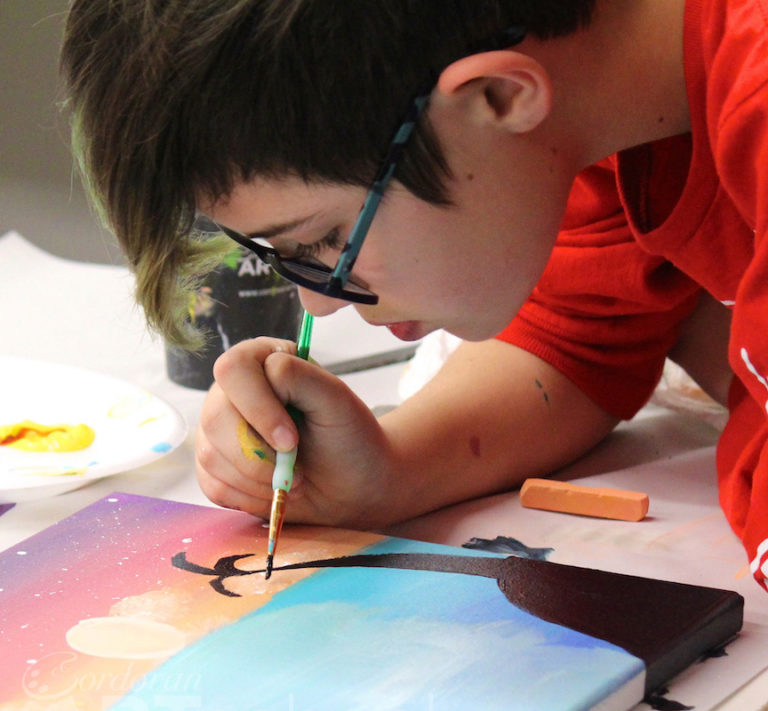
- Children who are energized by bold, saturated, textured color, because the paint’s high viscosity preserves brush marks and palette-knife ridges that younger artists find deeply satisfying to build.
- Anyone whose patience is limited, given that layers can be stacked within a single sitting rather than demanding hours of drying between each pass.
Why Do Beginners Love Watercolor Paint?
Watercolor is pigment bound in a water-soluble medium, traditionally gum arabic, and it is applied in thin, translucent washes rather than opaque blocks, so light travels through each layer, reflects off the white paper beneath, and returns to the eye with a luminosity no other common medium quite reproduces. That glow is the entire appeal.
For watercolor, the practical advantage that converts hesitant beginners is the near-effortless setup and cleanup. A modest pan set, a single brush, a jar of water, and an appropriate sheet of paper constitute the whole kit, which fits inside a backpack, wipes cleanly off tabletops, rinses out of most fabrics, and stores flat without ceremony. For a young child painting at a kitchen table, that minimal mess footprint frequently decides the entire question before technique even enters the conversation.
Control, however, is the compensating difficulty. Because the medium is transparent, you cannot simply obscure a dark region beneath a lighter one the way acrylic permits; the brightest value in a finished watercolor is ordinarily the untouched white of the paper, which forces the painter to plan and preserve highlights from the outset rather than reclaiming them later. Certain staining pigments bond to the sheet on contact and resist any attempt to lift them back out. Learning watercolor is therefore less about brush control than about collaborating with the water instead of fighting its tendency to flow, pool, and granulate on its own terms.
Watercolor suits a particular temperament and situation:
- Younger children painting at home, where easy cleanup and washable pigment matter far more than durability or archival permanence.
- Adults seeking something portable and genuinely calming, the kind of compact hobby that travels comfortably to a park bench, a balcony, or a hotel room.
- Anyone drawn to soft, atmospheric, blended imagery, such as loose botanical studies, diffuse skies, and rapid travel sketches.
One observation from years of beginner instruction deserves emphasis: new painters routinely blame their own hands when a wash turns muddy, when the actual culprit is almost always the paper. Lightweight printer stock buckles, pills, and disintegrates on contact with water, whereas a sheet of 140 lb (300 gsm) cold-press watercolor paper, properly sized to slow absorption, behaves like an entirely different medium and resolves a remarkable proportion of what frustrates first-timers.
Watercolor vs. Acrylic Paint: A Head-to-Head Comparison
Here is the condensed watercolor vs. acrylic paint breakdown for anyone deciding tonight and wanting every variable visible at once.
| Feature | Acrylic Paint | Watercolor Paint |
| Setup & cleanup | Requires palettes, water cups, and immediate brush washing before the paint cures hard. | Minimal setup; palettes and brushes rinse clean later without urgency. |
| Fixing mistakes | Straightforward: allow the layer to dry, then paint directly over it. | Difficult: transparency makes errors stubborn to conceal. |
| Best surface | Canvas, primed wood, heavyweight paper. | Paper engineered specifically for watercolor. |
| Mess factor | High: permanently stains clothing and carpet once cured. | Low: washes out of most fabrics. |
| Color vibrancy | Bold, saturated, opaque. | Soft, luminous, transparent. |
Read the table from top to bottom and a consistent pattern emerges. Acrylic exchanges mess and permanence for the psychological comfort of fully correctable mistakes, while watercolor surrenders that safety net in return for portability, gentler cleanup, and a distinctive transparency that many painters pursue for a lifetime. Neither medium is superior in the abstract. One of them is simply better matched to your particular circumstances.
Which Paint Is Better for You or Your Child?
The accurate answer depends on who is painting, in what environment, and toward what end, so the sensible approach is to divide the decision by painter, because the correct choice for a seven-year-old at a kitchen table has little in common with the correct choice for an adult who has a spare corner and an unhurried Saturday.
Choosing Between Watercolor and Acrylic as an Adult Beginner
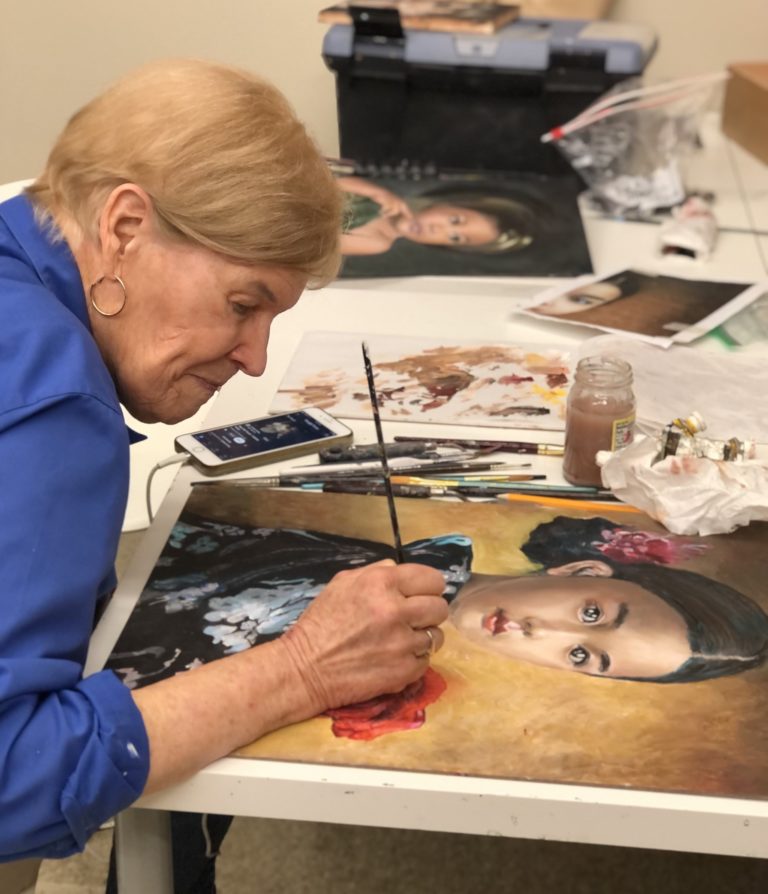
Begin with acrylic if you envision producing framed canvas work and you value the reassurance of overpainting anything that goes wrong, because that reversibility keeps a great many adults in the chair long enough to actually accumulate skill. Choose watercolor instead if your space is constrained, your tolerance for cleanup is low, you travel frequently, or you are temperamentally drawn to the loose, unpredictable, almost meditative character of transparent washes. Many adults eventually maintain both. For a first purchase, select the medium that genuinely fits your space and patience rather than the one that merely sounds more serious.
What Should Parents Pick for a Child?
Environment dictates this far more than the child’s age does.
- At home, favor watercolor or a washable tempera, both of which spare your furniture, walls, and your child’s clothing during the inevitable learning curve while keeping cleanup to a few minutes.
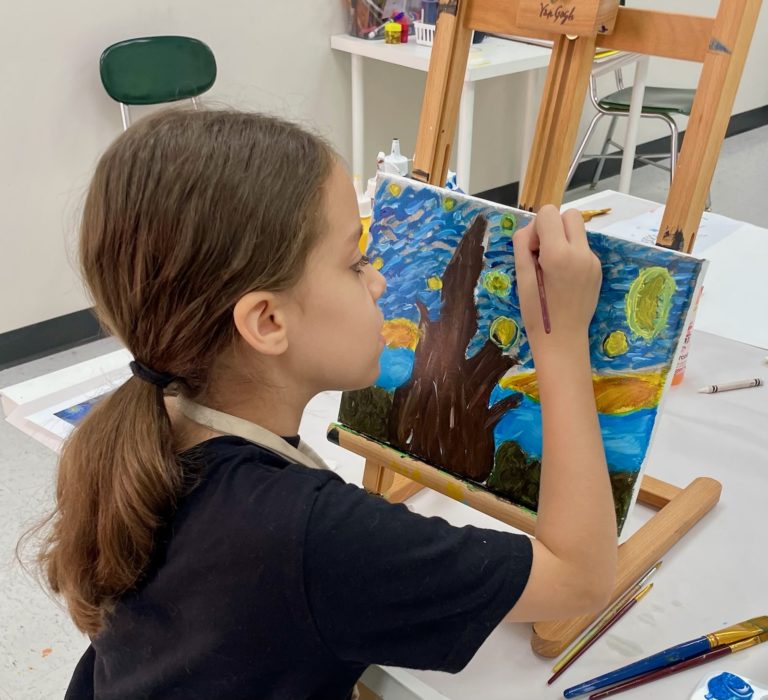
- In a supervised studio setting, acrylic becomes an excellent option for children from roughly age six upward, because the studio absorbs the mess, instructors manage the spills, and the child leaves holding a vivid, finished canvas. That sense of completing a real object is a powerful motivator for a developing young artist.
This distinction explains why so many families settle on washable paint at home and reserve acrylic for class, capturing the benefits of each without ever repainting a dining chair.
Do You Need Expensive Supplies to Start?
No. A competent beginner kit in either medium costs less than a single family dinner out, which surprises people who assume painting is an expensive entry. A starter acrylic set of six to twelve tubes, two synthetic brushes, and a pad of canvas paper typically runs most beginners somewhere between 25 and 40 dollars. A student-grade watercolor pan set paired with one round brush and a block of 140 lb paper occupies a similar range, and it endures a surprisingly long time because each transparent wash consumes so little pigment.
Spend where the money actually changes the outcome. With watercolor, the paper influences the result more than the paint does, so invest in proper watercolor stock before upgrading your colors. With acrylic, a shedding budget brush that deposits stray bristles into a wet layer will sour the experience faster than inexpensive pigment ever could, so allocate a few dollars toward one dependable brush. Student-grade paint is entirely adequate for a first year. You can pursue artist-grade lightfastness and single-pigment formulations later, once the habit has clearly taken hold.
Start Painting at a Studio Near You
Reading about paint is one thing. Loading a brush and committing it to canvas or paper is where comprehension finally consolidates, and that consolidation happens considerably faster when an experienced instructor is guiding your hand through the first few passes. At Cordovan Art School, our teachers walk beginners of every age through the fundamentals of both mediums, so nobody has to guess which tube to buy or why a promising wash keeps collapsing into mud.
Adults and teens can develop these skills through our Drawing & Painting classes for grown-ups and the teen Anime & Fantasy track, both of which explore acrylic and watercolor technique in genuine depth. Younger artists build real painting ability week over week in the Pencil, Pastel & Watercolor class for ages six to eight and in Color & Expression for ages nine to twelve, progressing through our ten-level curriculum that advances students in stages, much like earning belts in karate.
Still undecided? That uncertainty is exactly what a trial is designed to resolve. You can book a free trial class and experience the studio with zero commitment, watch which medium your child instinctively gravitates toward, and decide from firsthand evidence. Families throughout Round Rock, Katy, Bellaire, Energy Corridor, and Atascocita can find a nearby studio and start painting this week. Bring the curiosity. We will handle the mess.