Why Kids Who Say They “Hate Art” End Up Loving Pop-Culture Art Camps
Every parent of a gamer has heard it. “I’m not good at art.” “Art is boring.” Then that same kid spends three hours building a base, memorizing character stats, and narrating an entire storyline to anyone who will listen. That is not a child who hates creativity. That is a child who has not found the right door into it, which is exactly what the best art camps for kids in Houston are built to open.
Reluctant young artists rarely dislike making things. They dislike the blank page, the pressure, and the quiet worry that whatever they draw will come out wrong. Pop-culture art camps flip that script. When the subject is a character your child already loves, the fear drops and the fun takes the wheel.
Here is what that looks like inside a studio, and why the first week of January is the moment to try it.
Why Do Kids Say They Hate Art?
Most kids who claim to hate art do not actually hate creating. They have not connected drawing to the worlds they already live in.

Think about where your child’s imagination spends its time. Game maps. Fantasy battles. Character design, lore, and color palettes they could recite in their sleep. All of that is visual thinking. The gap is not talent. It is theme.
A blank canvas intimidates a child who already doubts their ability. Hand that same child a familiar hero to draw, and the starting point shows up on its own. They know the colors. They know the personality. They know the backstory. The pressure that used to freeze them turns into momentum, because now they are drawing something they care about getting right.
That shift, from dread to “let me try this,” is the whole point. If your child treats January as a reset, a camp built around their favorite worlds pairs naturally with the kind of creativity-focused New Year’s goals that tend to stick.
What Do Kids Actually Learn at a Pop-Culture Art Camp?
Plenty, and most of them never notice it happening. A pop-culture art camp at Cordovan is not casual doodling. It is structured studio instruction wearing a costume.
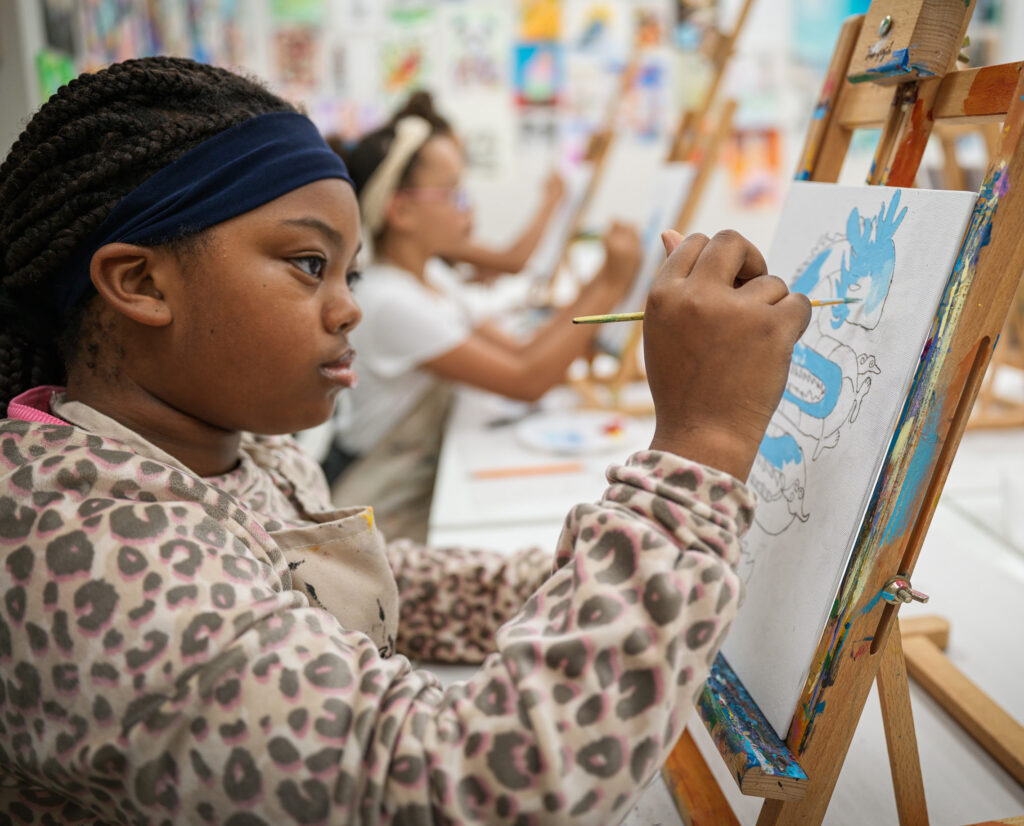
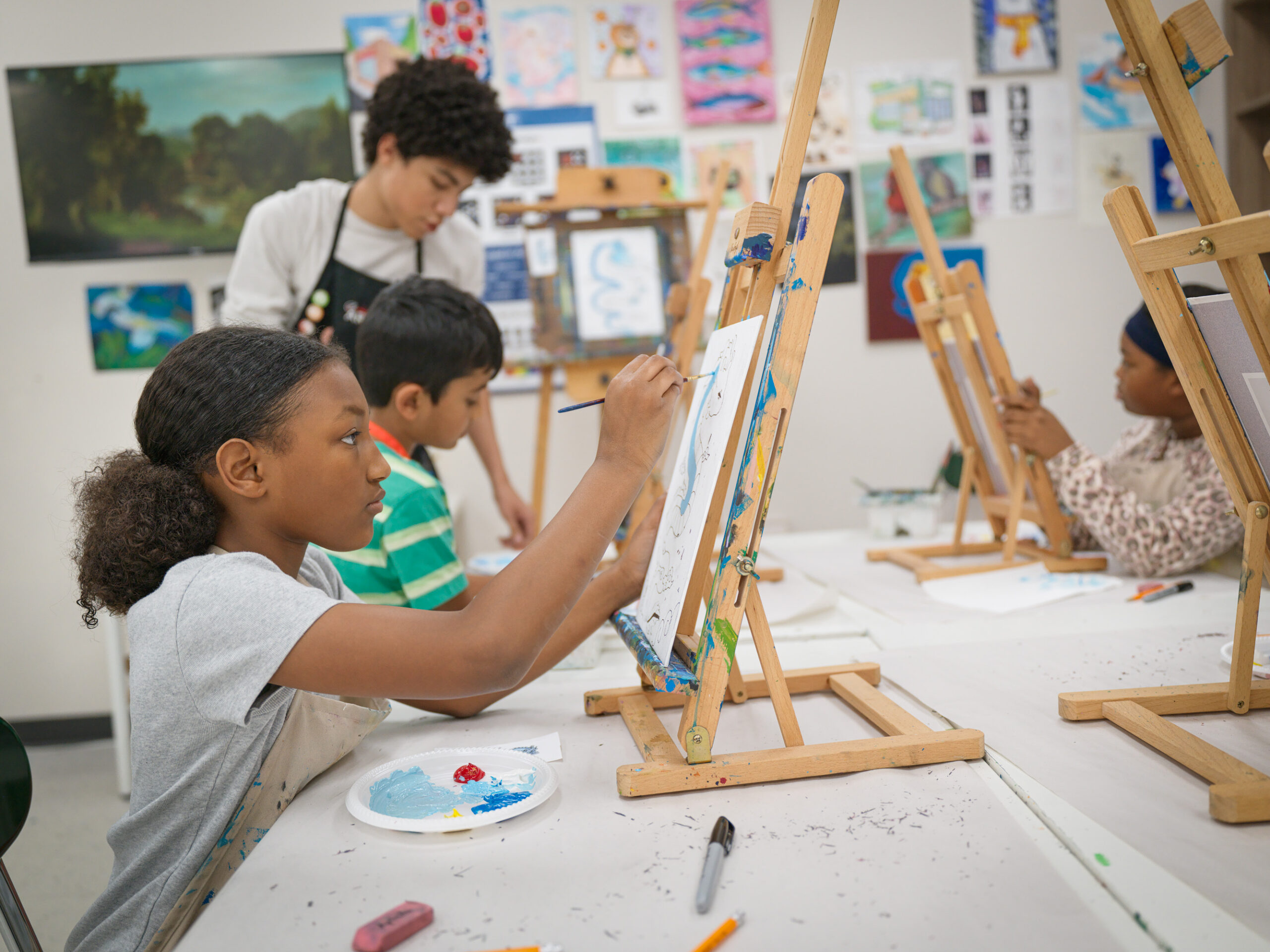
While your child thinks the mission is “draw an epic crossover scene,” our instructors are teaching the same foundations we cover in weekly classes. The theme is the hook. The skills are the point.
Here is what campers build while they think they are only having fun:
- Proportion and shapes. Instructors break complicated characters into simple, repeatable steps, so a kid learns to see a dragon or a hero as a set of basic forms instead of one impossible whole.
- Color theory and blending. Campers layer and mix to make a world pop off the page, and they absorb why some colors clash and others sing, long before anyone uses the phrase “complementary palette.”
- Composition and storytelling. Designing an original mashup scene forces real choices about focal point, balance, and what the picture is actually trying to say.
Here is the part most parents miss. The skills transfer. A kid who learns to rough in a character with light construction lines is not just drawing their favorite monster better. They are building the same observational habit that lets them tackle a still life, a pet, or a self-portrait two levels later.
That is the same foundation kids develop in our structured, 10-level weekly program, the one we describe to parents as working a lot like belts in karate. The difference is that nobody at camp feels lectured. They feel like they are making something that belongs to them.
The “Wait, I Actually Made That?” Moment
The biggest reason kids quit art is the gap between the picture in their head and the one on the paper. Good instruction closes that gap. Fast.
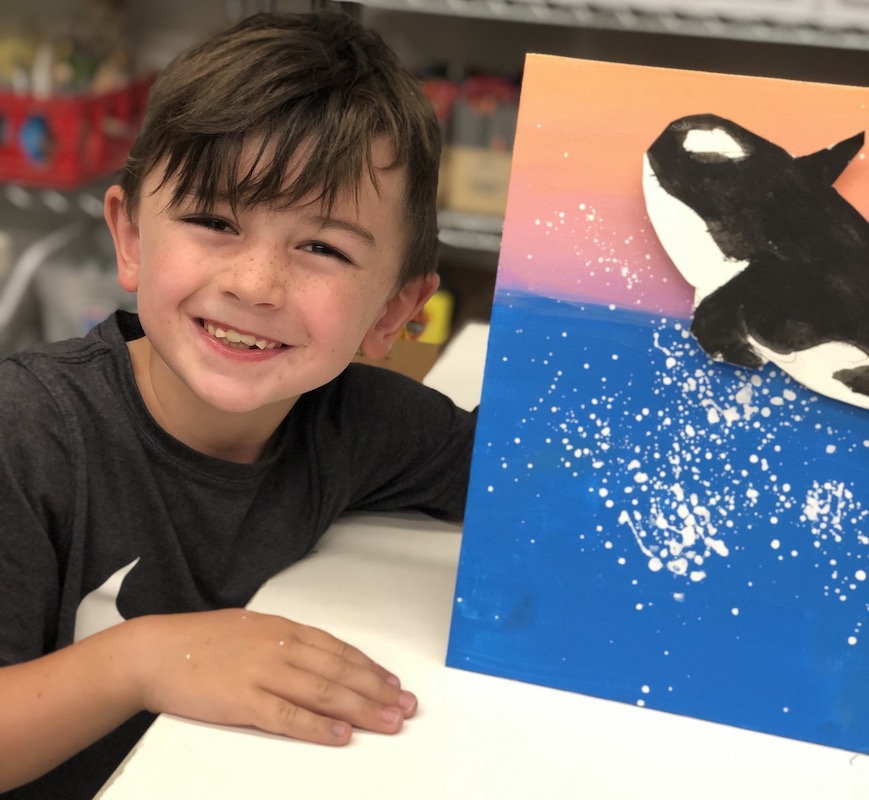
With step-by-step guidance from professional instructors and real studio-grade materials, a hesitant kid can go from unsure to proud inside a single day. Decent brushes matter. Good paper matters. A teacher who can point to exactly where the proportion slipped matters more than almost anything a parent can buy for the kitchen table at home.
In our experience, the turning point is almost always physical, not verbal. You can tell a child they are talented a hundred times and watch it bounce right off. Hand them a finished canvas they made with their own hands, and the belief finally sticks. Parents often tell us the piece lands on a bedroom wall instead of the fridge, which is its own quiet kind of proof.
A Screen-Free Community Right After Winter Break
By early January, most families have hit their screen ceiling. The tablets have run for two straight weeks. The controllers could use a rest. So could everyone else.
A winter break art camp swaps the screen for a room full of kids who share your child’s exact obsessions. They trade ideas. They argue, cheerfully, about which character would win in a fight. They collaborate in a loud, high-energy, screen-free studio, then come home having talked with real humans about the things they love most.
Pediatric guidance has long pushed families to balance screen time with hands-on, creative play, and the American Academy of Pediatrics steers parents toward exactly this kind of offline, social activity. Camp delivers it. The bonus for you? Not one drop of paint on your own table.
Camp Spotlight: Worlds Collide, First Week of January
Our January camp runs on a simple, irresistible premise: Pokemon meets the Mushroom Kingdom. Worlds Collide takes place the first week of January, while school is still out, and it is built for exactly the kid we have been describing.

Campers pick their characters, power up their creativity, and create original crossover masterpieces that blend universes in ways only they would dream up. It is familiar enough to feel safe and open enough to feel like invention.
A typical day moves in stages. Instructors start with a short demo, break the character down on a shared easel, then set campers loose on their own version with coaching at every table. By the last day, every kid walks out with at least one finished crossover piece, plus a few warm-ups they are weirdly proud of.
More into rockets than mushrooms? A second theme, Blast Into the New Year, runs during the same window for kids who would rather head for orbit. Same studio quality, different galaxy. Our Bellaire studio draws families from Bellaire, West University, and Meyerland, and winter sessions there tend to fill quickly once break begins.
What Should Parents Expect From a Winter Break Art Camp?
A winter break art camp at Cordovan is a multi-day program for kids roughly ages 5 to 12, taught by instructors who adjust the challenge by age and skill. No experience required. No supply list to shop for either.
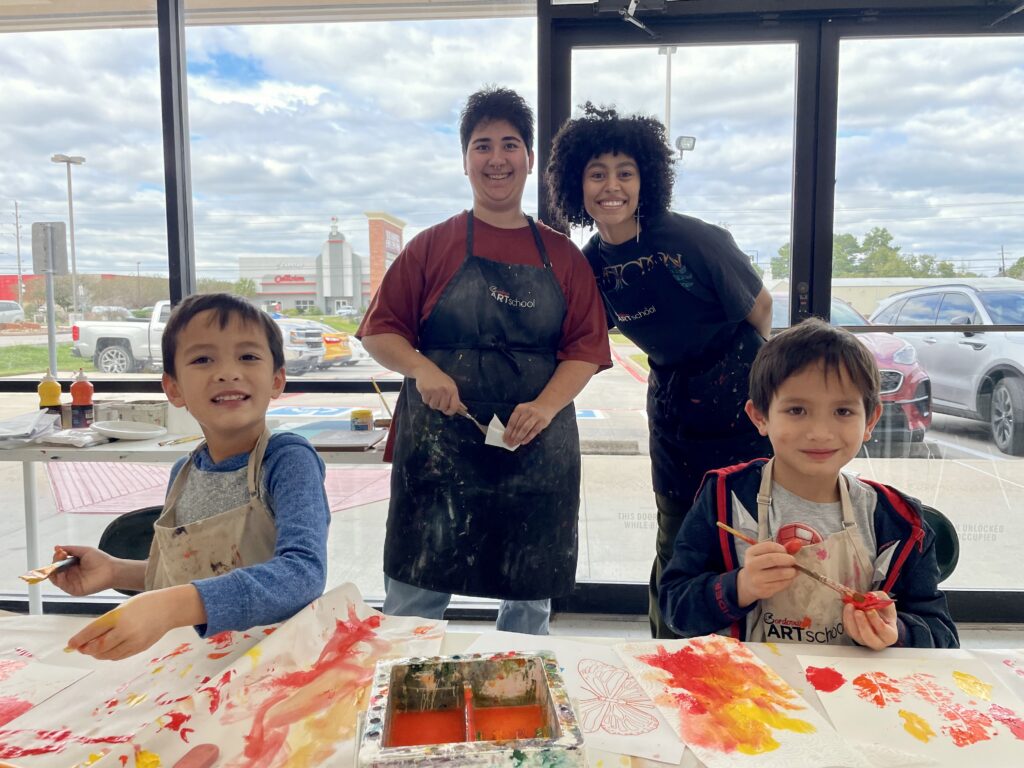
Everything is provided: studio-grade paper, paints, brushes, and the guidance that turns “I can’t” into a finished piece. Drop-off and pickup follow the studio’s posted camp hours, which you will see listed next to each session’s dates.
A few things worth knowing before you register:
- Ages and grouping. Camps serve the 5 to 12 range, and instructors tailor the difficulty so a 6-year-old and an 11-year-old both leave with work they are proud of.
- What comes home. Every camper finishes at least one complete, display-ready artwork, and usually a few extras.
- No prep on your end. Send your kid in clothes that can take a little paint, and we handle the rest.
That low barrier is the point. A reluctant artist should be able to walk in cold on a Monday and walk out Friday with something they want to show off.
Give the “Non-Artsy” Kid One Real Shot
Sometimes the only thing standing between a kid and a sketchbook habit is the right theme. One camp. One finished piece they did not believe they could make. That is often all it takes.
Cordovan art camps for kids are designed around that exact turning point, which is why our motto is “We Create Artists,” including the ones who swore off art last week. If your child lights up for games, characters, and invented worlds, this is the on-ramp.
Reserve your camper’s place in Worlds Collide on the Bellaire studio’s camp page. And if the camp sparks something, ask about rolling that momentum into weekly classes like Drawing & Sketching, Color & Expression, or Anime & Fantasy for teens, each one easy to test first with a free trial class.