The Limits of Online Art Tutorials: Why Your Teen Needs a Real Art Teacher
Your teenager’s phone is probably a better art museum than anything you had access to at their age, because YouTube, TikTok, and Instagram now deliver an endless, algorithmically sorted stream of speed-paints, anime drawing guides, and timelapse portraits from working professionals around the world. As a source of inspiration, online art tutorials are genuinely fantastic, and no serious art teacher would tell a teen to stop watching them. The trouble starts when watching gets mistaken for learning. Observing a professional render a flawless eye in ninety seconds is not remotely the same as understanding facial anatomy, the musculature around the socket, or how light wraps a curved surface, and a passive feed can never close that gap on its own. Inspiration is cheap and abundant now. Skill is not. What a growing artist actually needs falls into three categories the internet structurally cannot provide: personalized critique, foundational theory, and a real creative community, and here is what changes the moment a teen steps away from the screen and into a professional studio.
Where Do Online Art Tutorials Fall Short?
Online art tutorials fall short because they broadcast a single predetermined path to one finished image, with no capacity to observe, diagnose, or respond to the individual student following along. A video is a monologue. Learning to draw is a dialogue, an iterative feedback loop between an artist’s intention, the marks actually landing on the page, and a trained eye pointing out the difference. That loop is precisely what a prerecorded file cannot supply, no matter how skilled the creator or how many millions of views the clip has accumulated.
This matters more for teenagers than for any other age group. Adolescence is when habits calcify, and a self-taught teen can spend two years reinforcing a grip, a proportion error, or a shading reflex that then takes far longer to unlearn than it ever took to acquire.
Can a Video Really Critique Your Teen’s Work?
No. A video cannot look at your teen’s sketchbook, which is the entire problem with relying on it as a teacher. A tutorial has no idea that a student’s characters keep leaning three degrees to the left, that their pencil grip is choking off the range of motion in the wrist, or that every figure they draw secretly avoids hands because nobody has shown them a reliable method for constructing one.
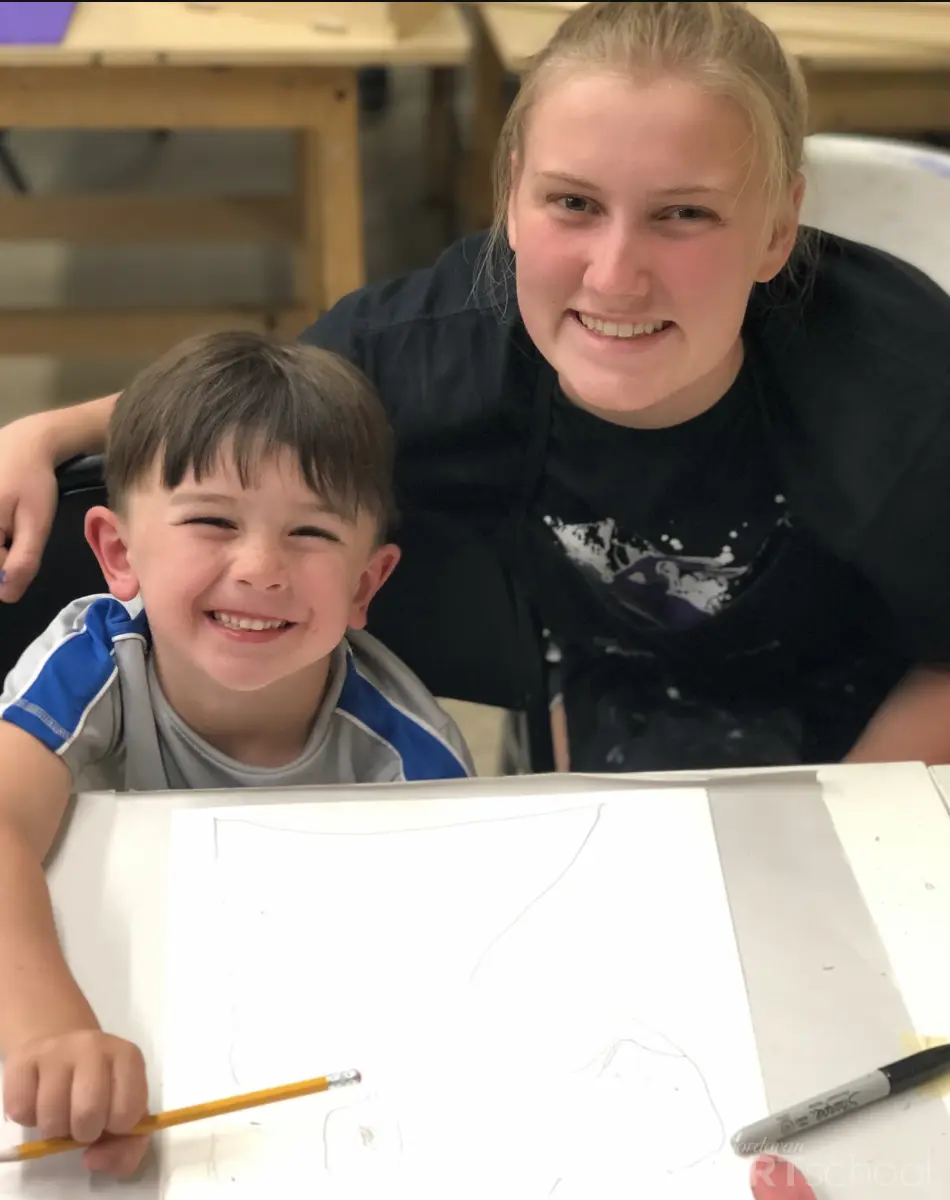
Personalized art instruction begins exactly where the video ends. In a Cordovan studio, an instructor circulates, leans over the easel, and delivers real-time art critique calibrated to the artist in front of them: a thumbnail redrawn in the margin, a wrist repositioned, a value structure corrected before the whole drawing goes muddy. That kind of targeted feedback catches blind spots early and dismantles bad habits before they become permanent, which routinely saves teens hundreds of hours of the plateau-and-frustration cycle that drives so many self-taught artists to quit. Decades of arts-education research compiled by the National Endowment for the Arts tie sustained, guided instruction to stronger creative and academic outcomes, and the mechanism is not mysterious. Feedback is the ingredient.
A screen simply cannot give it.
Copying vs. Creating: What Online Art Tutorials Rarely Teach
Here is the quiet limitation almost nobody notices while they are enjoying the content. The overwhelming majority of these videos are step-by-step instructions for reproducing one specific image, which trains replication rather than creation. The teen follows along, produces a passable copy, feels a jolt of accomplishment, and then stalls completely the instant they try to draw something from their own imagination with no video to mirror. They have been practicing tracing someone else’s decisions, not making their own.
A professional teacher inverts that entirely by drilling the transferable fundamentals underneath every finished piece: perspective, color theory, anatomy, gesture, composition, and the behavior of light across form. Master those, and a student can build anything. Skip them, and they remain dependent on the next tutorial forever.
This is the whole philosophy behind our Anime & Fantasy classes for teens. Rather than copying existing manga panels frame by frame, students learn to construct original characters, creatures, and worlds from first principles, using the same foundational skills that let professional concept artists invent on demand. It is a point we make often, and it connects directly to the argument in our piece on why art matters even more than ever in the age of AI: the ability to originate, not just reproduce, is exactly the human capacity worth cultivating in a teenager right now.
Mentorship and Building a Competitive Teen Art Portfolio
An algorithm optimizes for watch time. It has no concept of your teen’s trajectory, no stake in their growth, and no ability to prepare them for a high-stakes application that could shape the next decade of their life.
Mentorship fills that void.
For teens aiming at specialized art magnet schools, selective university programs, or eventual careers in graphic design, illustration, animation, or game art, the deciding factor is almost always a portfolio, and a strong one does not assemble itself from scattered tutorial exercises. Admissions reviewers are reading for specific signals, and an experienced mentor knows how to surface them. A competitive teen art portfolio generally needs to demonstrate:
- Observational drawing from life, not from photographs or other artists’ work, since reviewers can spot the difference instantly and weight it heavily.
- Range across media and subject matter, proving the applicant can handle more than one comfortable style on repeat.
- A sustained personal project or coherent theme, which shows conceptual thinking rather than a folder of unrelated one-offs.
Cordovan’s structured ten-level program exists to track exactly this kind of progression, moving students through clearly defined skill stages the way martial arts advance through belts. Instructors who have guided prior students through admissions know where a portfolio is thin, and they will deliberately push a teen out of their stylistic comfort zone to prove the breadth and versatility that selective programs demand.
Why Does a Screen-Free Art Community Matter for Teens?
A screen-free art community matters because making art alongside other people is a fundamentally different experience from consuming art alone, and that difference shows up in both skill and wellbeing. Scrolling a feed, however inspiring the content, is a solitary and often isolating activity that keeps a teenager’s creative life locked inside a six-inch rectangle.
A studio breaks that open. Teens work shoulder to shoulder with peers who share their specific obsessions, whether that is fine art, anime, or mixed media, and some of the fastest growth happens sideways, from glancing at a classmate’s easel and absorbing a solution nobody formally taught. They trade references, troubleshoot each other’s compositions, and build the kind of creative friendships that sustain an interest through the years when it would otherwise fade. That social dimension, the simple fact of being seen and taken seriously as an artist by actual humans, is something we explored in our post on the secret superpowers of an artist, and it is impossible to replicate through a one-way screen.
Are Online Tutorials Ever Enough on Their Own?
For casual doodling, sure. But for a teenager who wants to get genuinely good, or who is quietly weighing art as a possible direction in life, no single feed can carry them the whole distance, and pretending otherwise is how promising young artists stall out around age fifteen. The honest framing is not screen against studio, as though the two were enemies locked in a war for your teen’s attention. It is a question of sequence and balance.
Use both, deliberately. Let the feed do what it genuinely does best, which is spark ideas, expose your teen to styles and subcultures they would never have stumbled onto alone, and keep motivation burning between classes. Then carry those references into the studio, where an instructor can translate a half-grasped trick from a thirty-second clip into a repeatable method the student actually understands and owns. That handoff, from passive inspiration to guided practice, is where measurable progress compounds week after week.
The teens who improve fastest are almost never the ones who have watched the most videos.
They are the ones who watch a few, then show up somewhere real with a pencil, a specific problem, and a teacher who can see both at once.
Turn Inspiration Into Real Skill
Online tutorials are a wonderful place for a teenager to catch the spark. A studio is where that spark becomes durable, transferable skill, because only a real teacher can see the actual paper, answer the actual question, and push the actual student standing in the room. As our tagline puts it, we create artists. A feed only creates viewers.
Is your teen ready to move past copying videos and start building real ability? You can book a free trial class at Cordovan Art School and let them experience personalized art instruction firsthand, with zero commitment. Families across Round Rock, Katy, Bellaire, Energy Corridor, and Atascocita can find a nearby studio and get started this week. Bring the phone for inspiration if you like. We will take it from there.